AI Consulting
AI Consultant for Small Business: What Good Looks Like
A good AI consultant for small business starts by learning how the work moves. They find where people rebuild context, repeat decisions, chase follow-up or carry a process in their head. Tool selection follows that diagnosis.
A sound engagement should make recurring work easier, keep human judgement visible and leave the business able to run what was built. This guide explains what Australian small businesses should expect, which deliverables should arrive and what to check before approving a build.
What should an AI consultant do first?
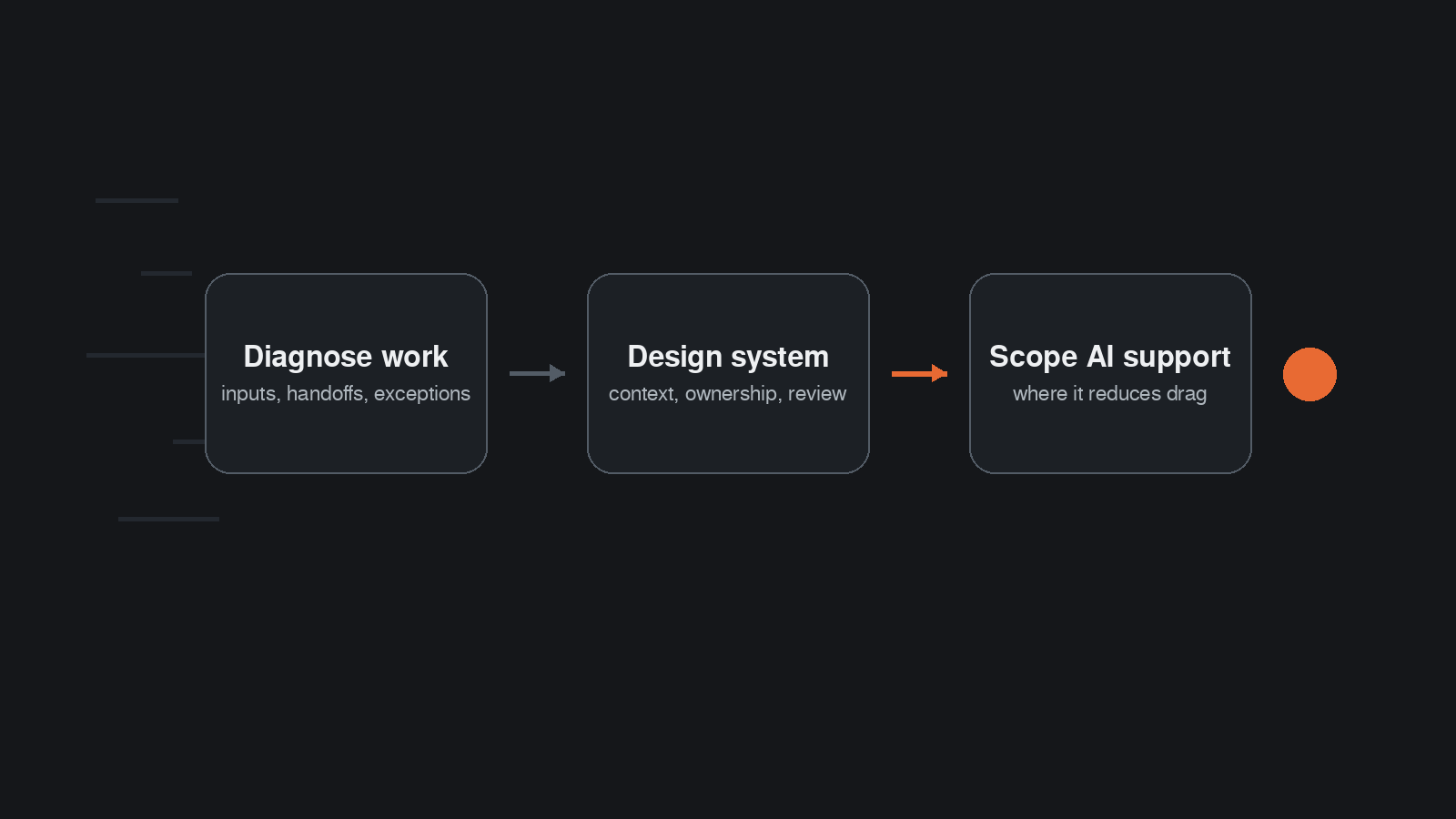
An AI consultant should map the current workflow before recommending a tool. The map should show inputs, decisions, handovers, records, exceptions and the person accountable at each point.
The map should include the gaps between the written procedure and the way experienced people handle real cases. Business process mapping makes the work visible, while systemising a small business helps turn the findings into work the team can repeat.
The consultant should then define one problem in plain language. A useful problem statement names the work, burden, people affected and desired result.
Note
In practice, this means: Ask the consultant to show the current and proposed workflows side by side. If the only visible change is an AI tool added to an existing step, the work may still need redesign.
Why does the Australian context matter?
Australian small businesses need advice grounded in local regulation, available support and the way smaller teams carry risk.
The Australian Bureau of Statistics reported in June 2026 that around 12 per cent of businesses used AI in the workplace during 2024-25. Uptake among small and micro businesses was around 11 per cent, compared with 22 per cent for medium businesses and 35 per cent for large businesses. The survey covered nearly 7,000 businesses.
The National AI Centre advises businesses to connect AI to a defined outcome, support their people, assign accountability, check data fitness and review end-to-end processes. It says process redesign is often where AI produces meaningful productivity gains. Choose a consultant who can work across the workflow, people, data and controls.
Where do AI consulting engagements go wrong?
AI consulting goes wrong when delivery ends at the tool. A summary assistant, prompt library or automated handover becomes another place to check when ownership and follow-through remain unclear.
The model is only one part of the result. Business records, access rules, review points, exception handling and staff habits determine whether the output can be trusted.
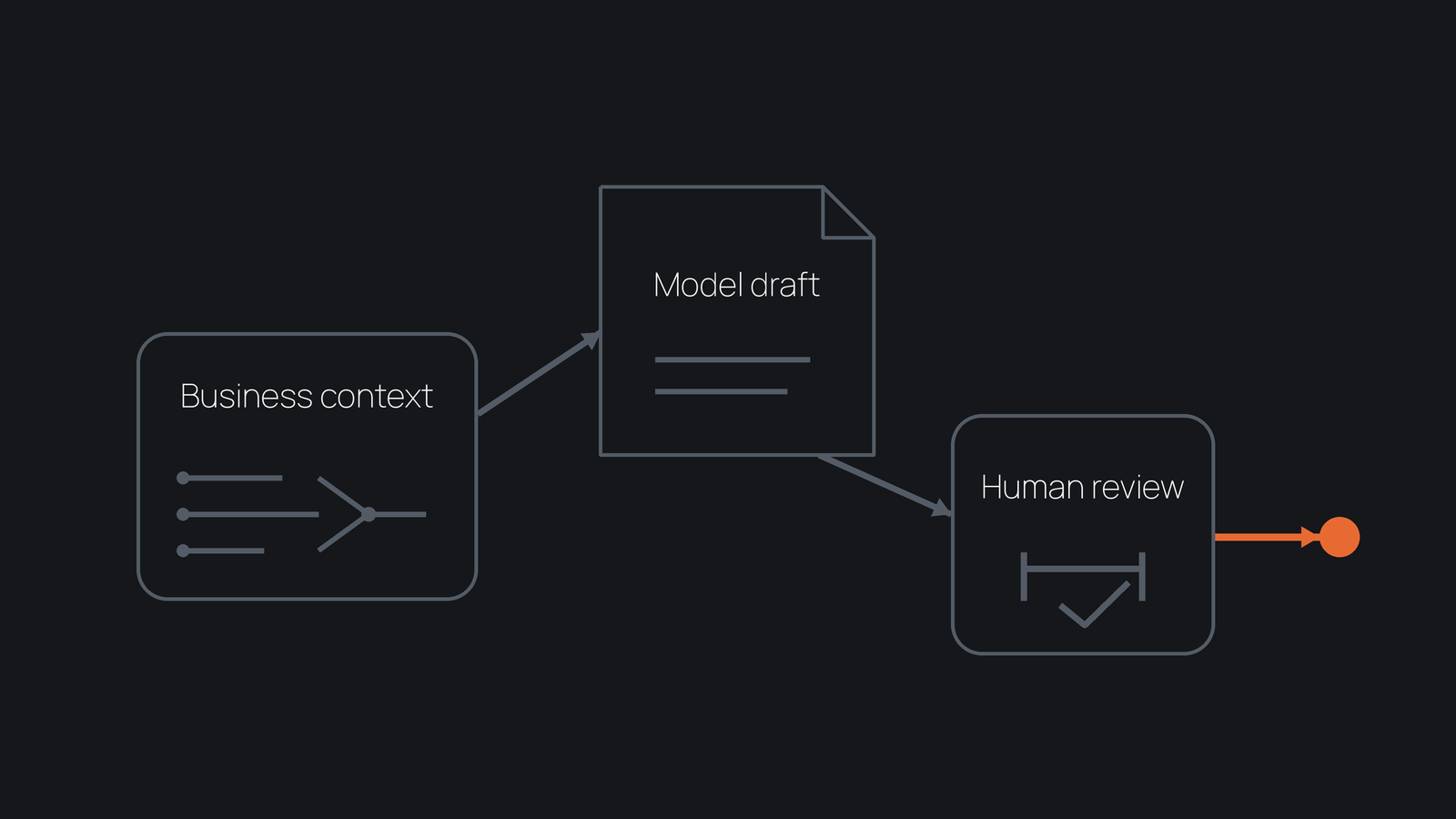
A good consultant narrows the first scope. Phase one AI automation should cover one workflow, one accountable owner and observable measures. The team should know what success looks like, what would trigger a redesign and what remains manual.
This approach protects the operator's judgement. AI can prepare client context, draft a follow-up or surface a prior decision. A person still owns the decision and checks exceptions.
What should an AI consultant deliver?
A useful engagement leaves documents, decisions and working controls behind. The depth of each deliverable should match the risk and scope of the work.
- Current workflow map. A plain account of how the selected work happens now, including informal handovers, repeated decisions, exception paths and missing context.
- Problem statement and outcome. One agreed description of the burden, who feels it and what improvement the business will observe.
- Prioritised use-case shortlist. A short explanation of which opportunities were selected, deferred or rejected, with the reasoning recorded.
- Data and access map. The records the system needs, who may access them, where they are stored, and which information must stay out.
- Scoped pilot plan. The workflow boundary, responsible owner, review points, success measures, stop conditions and items that remain manual.
- Human decision map. The decisions a person must approve, the exceptions that require escalation and the person accountable for the outcome.
- Privacy and security review. Vendor due diligence, data handling terms, access settings, retention, incident notification and any privacy assessment required.
- Adoption and training plan. The people affected, training, feedback method and process for changing the workflow when evidence supports it.
- Handover and review schedule. Working instructions, named owners, known limitations, supplier contacts and the trigger for the next review.
A proposal can use different labels, but it should answer every underlying question. If an item is outside scope, the proposal should say who owns it.
How should privacy and cyber security be handled?
Privacy and cyber security belong in the design brief, supplier selection and handover.
The Office of the Australian Information Commissioner advises buyers to check whether a product suits the intended use, how human oversight will work, who can access personal information, and which privacy and security risks apply. It also recommends regular performance reviews, staff training and monitoring. For organisations covered by the Privacy Act, obligations can apply to personal information entered into an AI system and personal information produced by it.
The Australian Signals Directorate says small businesses should verify what data a service collects, where it is stored, who owns it, whether it is used to train models, and how the vendor reports a cyber incident. Staff also need clear rules about information that must stay out of the service.
A consultant should turn those questions into written controls. The proposal should name where qualified legal, privacy or cyber security advice is required.
How can you judge an AI consultant for small business?
A strong proposal links each activity to a decision, deliverable or control. It also makes ownership clear after the consultant leaves.
Check comparison
- Scope: a useful proposal shows: One workflow, its boundaries and exclusions; a weak proposal leaves unclear: Which work will change.
- Success: a useful proposal shows: Observable measures and review dates; a weak proposal leaves unclear: How the result will be judged.
- Control: a useful proposal shows: Human checks, escalation and data rules; a weak proposal leaves unclear: Who carries the risk.
- Handover: a useful proposal shows: Named owners, documents and ongoing review; a weak proposal leaves unclear: What happens after delivery.
Ask who will own the system inside the business. Clear AI ownership prevents a useful pilot from becoming an unattended tool.
Also ask what the consultant chose not to automate. A credible answer will name the decisions, exceptions or information that need human control.
What good looks like
A good AI consultant for small business makes the work visible, chooses a narrow problem and designs the controls around it. The consultant leaves the business with clear ownership, a usable handover and a review method.
Start with the recurring task that consumes attention or depends on one person's memory. Map it, define the desired result and decide where human judgement must remain.
Frequently asked
- What does an AI consultant for small business do?
- A good AI consultant maps how work moves, identifies a narrow business problem, designs where AI can help, defines human review and data controls, and leaves the business with clear ownership and handover material.
- What should I receive from an AI consulting engagement?
- Expect a current workflow map, agreed outcome, prioritised use cases, data and access map, scoped pilot, human decision points, privacy and security review, adoption plan, and handover with named owners.
- How do I choose the first AI project?
- Choose one recurring workflow where the burden is visible, the owner is known and the result can be reviewed. Keep high-risk decisions and poorly understood exceptions under human control.
- What should an Australian business check before using an AI product?
- Check the intended use, personal information involved, human oversight, access, storage, data ownership, model-training terms, incident notification and ongoing monitoring. Seek qualified privacy, legal or cyber security advice where the use case requires it.